
【PRESS RELEASE】New Approach to Quantum Computing’s Measurement Bottleneck Quemix and SCSK Develop “POD Readout”
- Jun 2
- 5 min read
a New Technology That Reduces Measurement Counts by up to a Factor of 1,000
June 2, 2026


Quemix Inc. (Headquarters: Nihonbashi, Chuo-ku, Tokyo; CEO: Yu-ichiro Matsushita; hereinafter “Quemix”), a company engaged in research and development of quantum computing algorithms and software, and SCSK Corporation (Headquarters: Koto-ku, Tokyo; Representative Director, President: Takaaki Toma; hereinafter “SCSK”) have developed a new technology called “POD Readout” (patent pending) to address the “readout (measurement)” bottleneck that hinders the practical implementation of quantum computing.
Rather than exhaustively reading all outputs generated by a quantum computer, this technology is based on the concept of directly extracting only the information that is truly essential to obtaining the solution. By reducing the number of measurements required by up to a factor of 1,000, POD Readout preserves the computational speed advantages of quantum computing while paving the way for practical simulations and analyses across industrial fields such as manufacturing, materials science, and finance.
1. Background and Challenges
Advanced simulation and analytical capabilities are becoming increasingly indispensable in modern society, from achieving carbon neutrality by 2050 to managing risks in increasingly complex financial markets.
In particular, large-scale and high-precision computations such as stabilizing power grids amid expanding renewable energy adoption, fluid dynamics and heat transfer simulations for high-efficiency energy systems, and molecular-level chemical simulations for next-generation batteries and semiconductor materials all require exponentially growing computational resources as model size and accuracy increase.
Conventional classical computers are approaching their limits in terms of computation time and scalability for such applications, leading to growing expectations for quantum computers as next-generation computational accelerators.
While recent advances in quantum algorithms and hardware have significantly improved computational capabilities, the practical realization of quantum computing still faces a major challenge: post-processing “readout” or “measurement.”
Although computations themselves can be performed rapidly on quantum computers, extracting accurate numerical results incurs enormous measurement costs. This process increasingly dominates overall execution time, effectively negating the intrinsic speed advantages of quantum computation and emerging as a critical bottleneck.
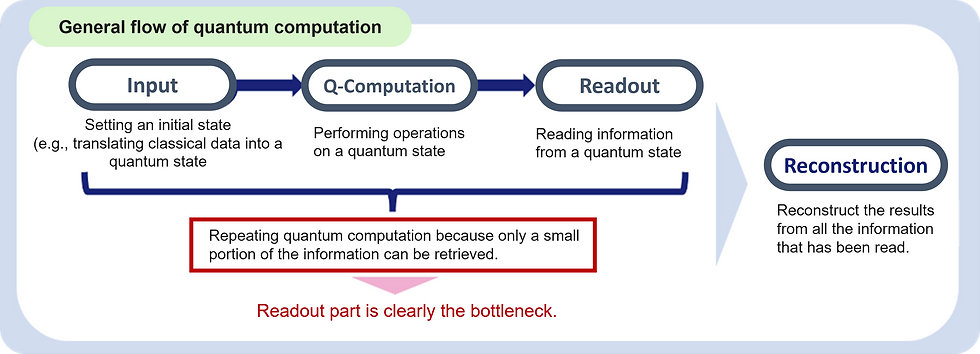
Figure 1: Flow and Challenges of Quantum Computing
Against this backdrop, Quemix and SCSK have focused on the issue of “measurement count,” which fundamentally determines the practical value of quantum computation, and have pursued research and development of a more efficient readout methodology that does not rely on the large-scale measurements conventionally considered necessary.
2. Overview of the New Technology: “POD Readout”
Since entering into a capital and business alliance in 2024, Quemix and SCSK have been conducting joint research in the field of quantum computing.
In this research project, the companies focused on computational fluid dynamics and developed “POD Readout,” a novel readout technology designed to efficiently extract essential information from quantum computational outputs.
Whereas conventional methods sequentially read quantum states, POD Readout first constructs reconstruction filters (POD bases*) from numerical fluid dynamics simulations performed in advance on classical computers.
These POD bases are then embedded into quantum circuits, enabling measurements of quantum states using the POD bases themselves. This approach allows the extraction of how strongly the quantum state contains components associated with the POD bases.
As a result, only the most important features can be directly extracted from quantum states, enabling efficient reconstruction of the target state. The technology is currently patent pending.

Figure 2: Overview Diagram of POD Readout
POD Readout offers the following key advantages:
Simultaneous reduction in measurement counts and maintenance of high accuracy By directly extracting the essential information contained in quantum states, the technology significantly reduces the number of measurements required while preserving measurement accuracy.
Preservation of quantum computational speed POD Readout mitigates the bottleneck at the quantum–classical interface without sacrificing the computational speed advantages of the quantum processing stage itself.
* POD Basis (Proper Orthogonal Decomposition Basis): A method for extracting representative patterns—such as characteristic vortex structures—from simulation datasets containing extremely large amounts of information, including fluid flow simulations. By focusing only on the most important features rather than handling all data directly, POD enables significant data compression while preserving essential information.
3. Contribution to the Practical Realization of Quantum Computing
Conventional readout methods require enormous numbers of measurements because quantum computational outputs must be measured sequentially. By contrast, POD Readout successfully reduces the required number of measurements by up to a factor of 1,000.
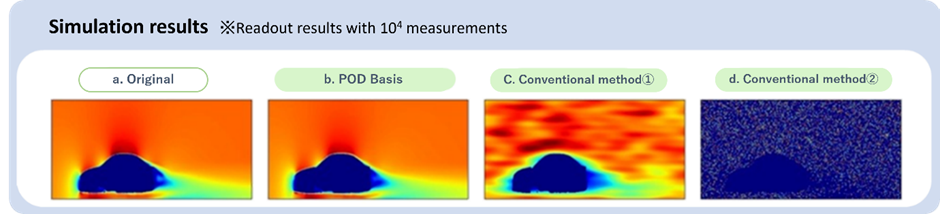
Figure 3: Results of Benchmark Data Experiment
In the benchmark experiment shown in Figure 3, the result in Figure 3(a) is treated as the ground truth solution, and the objective is to reconstruct an equivalent result.
Compared with conventional readout methods, POD Readout (Figure 3(b)) achieves reconstruction accuracy so high that differences are visually indistinguishable, despite requiring substantially fewer measurements.
The technology is particularly well suited for extracting key indicators and numerical values from quantum computational outputs and is expected to have applications in areas including:
Manufacturing: acceleration of computational fluid dynamics simulations for aircraft and automotive design
Materials Science: acceleration of molecular simulations for next-generation battery materials and semiconductor materials
Finance: acceleration of probabilistic calculations for derivative pricing and risk analysis
CG and Digital Twins: enhancement of computer graphics and digital twin technologies through advanced physical simulations such as light propagation
4. Future Outlook
Going forward, the companies will advance research into improving the generalization capability of the technology so that high-accuracy readout can be achieved with small numbers of measurements even for unknown bases.
Furthermore, through co-creation with customers, Quemix and SCSK aim to conduct proof-of-concept experiments combining POD Readout with quantum computational algorithms and to create innovative solutions that contribute to the realization of a decarbonized society and the strengthening of industrial competitiveness.
5. Presentation at Q2B 2026 Tokyo
Q2B is an international conference focused on business applications of quantum technologies.
Held annually in Europe, North America, and Tokyo, the event serves both as a platform for leading quantum computing vendors to showcase the latest product developments and advanced initiatives, and as an ecosystem-building venue connecting researchers, government stakeholders, end users, investors, and quantum technology providers worldwide.
The results of this joint research project will be presented by researchers from Quemix and SCSK in the Case Study Track at “Q2B 2026 Tokyo,” to be held at the Grand Hyatt Tokyo on June 4–5, 2026.
Q2B 2026 Tokyo Official Website: https://q2b.qcware.com/conference/2026-tokyo
About SCSK Corporation
SCSK Corporation provides a full lineup of IT services essential for business, including consulting, system development, verification services, IT infrastructure construction, IT management, IT hardware and software sales, and business process outsourcing (BPO).
The company also pursues new initiatives aimed at solving social and industrial challenges through co-creation with customers and society centered on information technology.
About Quemix Inc.
Quemix Inc., a consolidated subsidiary of TerraSky Co., Ltd. (Headquarters: Chuo-ku, Tokyo; CEO: Hideya Sato), conducts research and development in quantum computing, quantum sensing, and computational materials science.
Under its vision of “realizing the future humanity has dreamed of through quantum technology,” Quemix supports breakthrough innovations for companies leading the next generation of quantum technologies.
Since its establishment in 2019, the company has focused on research and development of algorithms for fault-tolerant quantum computers (FTQC), including the development and patenting of the “Probabilistic Imaginary-Time Evolution (PITE®)” quantum chemistry algorithm, which has been mathematically proven to achieve quantum acceleration.
As a leading company in FTQC algorithm research in Japan, Quemix is actively advancing research and development aimed at the practical application of quantum computing in materials computation and simulation by 2030.
Contact Information
Quemix Inc.
Inquiry Form: https://www.quemix.com/en/contact
(Note: All product names, company names, and service names mentioned herein are trademarks or registered trademarks of their respective companies.)


Comments